
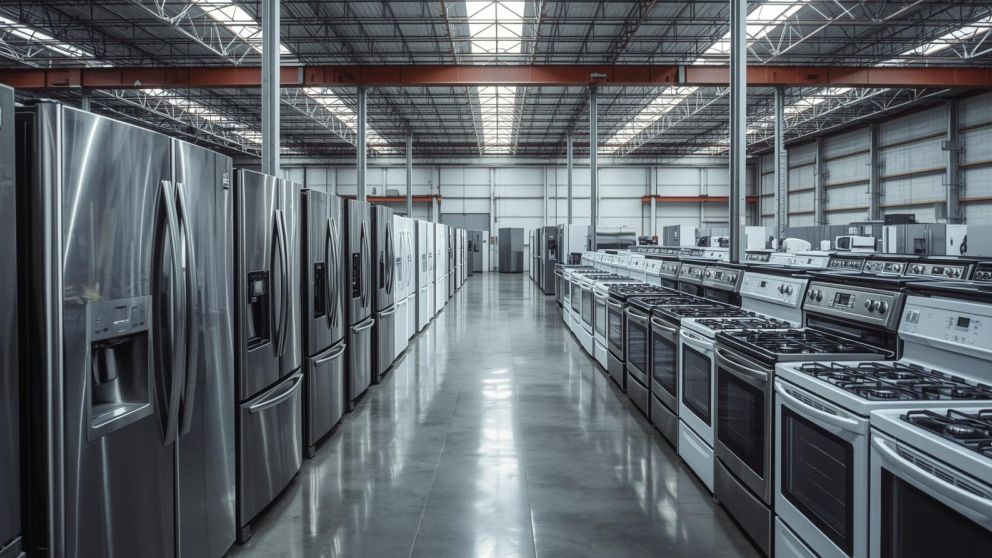
Over the last several years, the way people shop for appliances has started to change dramatically. What was once a simple trip to a big-box retailer has increasingly become a frustrating and expensive experience for many consumers. Rising prices, supply chain delays, limited inventory, and growing delivery costs have caused buyers to rethink how they purchase everything from refrigerators and dishwashers to washers, dryers, and commercial appliances. As a result, more people are discovering something that has quietly existed for years but is now rapidly moving into the mainstream: appliance auctions.
For many buyers, auctions were once associated primarily with antiques, estate sales, or heavy equipment. Appliances rarely entered the conversation. Today, however, appliance auctions are becoming one of the fastest-growing segments of the auction industry, attracting homeowners, landlords, contractors, flippers, resellers, and even first-time auction buyers looking for better value and more flexible purchasing options.
A large part of this shift comes down to economics. Appliance prices have climbed significantly in recent years, and many consumers simply no longer see the value in paying full retail price for brand-new inventory. In many cases, buyers are finding that they can purchase appliances at auction for substantially less while still receiving products that are fully functional and in excellent condition. Some may have minor cosmetic flaws, damaged packaging, or simply be overstock inventory that retailers need to move quickly. Others may be customer returns or open-box items that can no longer be sold as new in traditional retail environments, despite having little or no actual performance issues.
For practical buyers, that tradeoff often makes perfect sense. A small scratch on the side of a refrigerator hidden against a wall or cabinet may mean hundreds of dollars in savings. As consumers become increasingly value-conscious, many are prioritizing function and affordability over perfect showroom appearance. That mindset has helped fuel the rapid growth of scratch-and-dent appliance auctions and liquidation-style inventory sales across the country.
The rise of online auctions has also played a major role in changing public perception. Years ago, participating in an auction often required attending in person, understanding complex bidding procedures, and competing in unfamiliar environments that many casual buyers found intimidating. Online bidding platforms have completely transformed that experience. Buyers can now browse inventory from their phone or computer, compare products easily, monitor bidding activity in real time, and participate from virtually anywhere.
That convenience has opened appliance auctions to an entirely new audience. Consumers who may have never considered bidding before are becoming comfortable with the process because it feels more accessible and transparent. In many ways, online auctions now resemble traditional online shopping experiences—except with the added opportunity to secure products at significantly reduced prices.
Another major factor driving growth is the increasing demand from landlords and property managers. Replacing appliances across multiple rental units can become extremely expensive when purchasing new inventory at retail prices. Auctions provide property owners with a way to source appliances quickly while reducing operating costs. For landlords managing several units or apartment complexes, the savings can be substantial over time.
At the same time, appliance auctions have become popular among small business owners and resellers who purchase inventory in bulk, refurbish or clean the products, and resell them locally. In many areas, appliance resale businesses have grown rapidly as consumers search for affordable alternatives to retail stores. Auctions provide these businesses with a steady source of inventory while creating additional competition and activity within the auction marketplace itself.
Sellers are benefiting from this trend as well. Retailers, warehouses, distributors, and liquidation companies often face challenges when dealing with excess inventory, returned merchandise, or older models that need to be cleared out quickly. Holding onto unsold appliances takes up valuable warehouse space and ties up capital. Auctions provide an efficient way to convert inventory into cash while reaching a large audience of motivated buyers.
In many cases, the auction environment itself helps accelerate sales. Competitive bidding creates urgency and encourages buyers to act quickly rather than delaying purchases or negotiating endlessly. Unlike traditional classified listings or marketplace sales that may sit for weeks, auctions operate on a defined timeline that keeps inventory moving efficiently.
There is also an environmental aspect to the growing popularity of appliance auctions that many people overlook. Auctions help extend the life cycle of appliances that might otherwise remain unused in storage facilities or end up discarded prematurely. As sustainability becomes increasingly important to consumers, more buyers appreciate the idea of purchasing functional appliances that reduce unnecessary waste. In this way, auctions support both affordability and more sustainable consumption habits.
Of course, like any purchasing method, buyers should still approach appliance auctions carefully and do their research before bidding. Understanding condition reports, reviewing photos closely, checking pickup requirements, and setting a realistic budget are all important parts of the process. However, as more consumers gain experience with online bidding platforms, the learning curve has become much smaller than it once was.
What’s particularly interesting is that appliance auctions are no longer attracting only bargain hunters. Many middle-income buyers, homeowners, investors, and businesses now see auctions as a smart and practical purchasing strategy rather than a last resort. That shift in perception may be one of the biggest reasons the industry continues to grow so quickly.
As we move further into 2026, appliance auctions are likely to become even more common as buyers continue searching for ways to stretch budgets without sacrificing quality. Rising retail costs, growing comfort with online bidding, and increasing demand for affordable inventory are all contributing to this trend. What was once considered a niche corner of the auction industry is steadily becoming a mainstream option for both buyers and sellers alike.
For buyers and businesses in Jacksonville, FL and throughout North Florida, appliance auctions are becoming an increasingly attractive way to save money, source inventory, and find quality products without paying full retail prices. At Turbo Auctions, we continue to see growing interest in online appliance auctions as more consumers discover the value, convenience, and opportunities auctions can provide. If you’re interested in learning more about the auction process, you can also explore our related blogs on online bidding tips, liquidation auctions, and how online auctions work for first-time buyers.