If you've never consigned equipment to an auction company before, you may have questions about what happens after you decide to sell.
Where does the equipment go? Who prepares the listing? How is it marketed? When do buyers see it? And what happens after the auction ends?
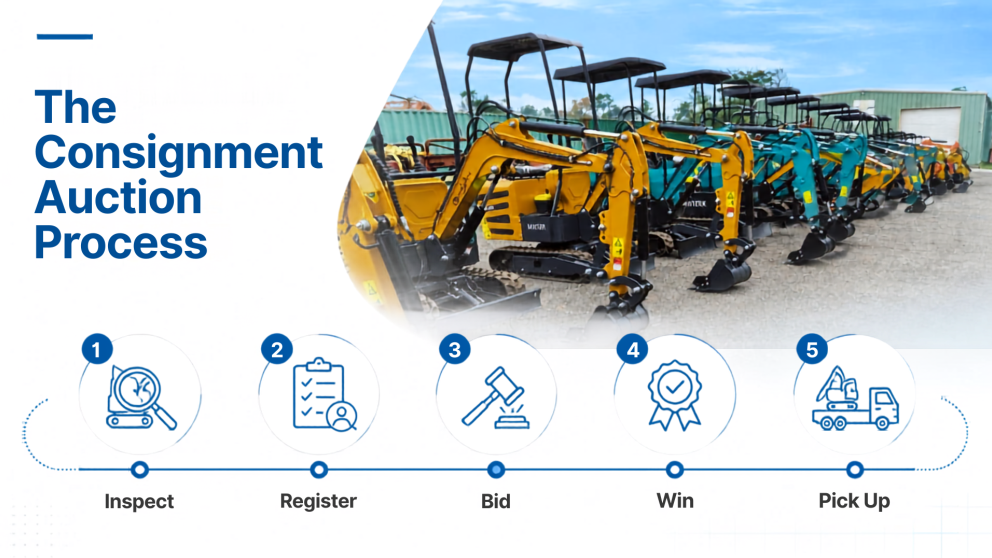
When you consign equipment with an auction company, you're not simply handing over an item and waiting for it to sell. There is a process behind the scenes that takes the asset from consignment to auction to final sale. At Turbo Auctions, our team handles that process for our consignors, from the initial market assessment and preparation of the asset to marketing, auction management, and the final transaction.
Here's what you can expect.
1. We Start With a Soft Appraisal
Before moving forward with a consignment, we start by getting an understanding of the asset and its potential value on the secondary market.
Our team performs a soft appraisal, giving the consignor an idea of what we believe the equipment could potentially bring at auction based on factors such as its type, make, model, age, condition, specifications, and current market demand. This isn't a formal appraisal or a guaranteed selling price. Instead, it gives you a realistic starting point for understanding where your equipment may fit within the secondary market.
For a business owner or contractor considering whether to sell, having an idea of the potential value can help make the decision easier. We can then discuss the equipment, the auction process, and whether consigning the asset makes sense for your situation.
2. We Start the Consignment Process
Once you've decided to move forward, we establish the consignment and determine how the asset will be incorporated into an upcoming auction.
Whether you're replacing an excavator, clearing out unused tools, downsizing a fleet, liquidating business assets, or selling surplus equipment, we work with you to determine what assets are appropriate for our auction and how they can be incorporated into an upcoming sale.
Equipment can include:
- Excavators and skid steers
- Tractors and agricultural equipment
- Motor graders and other heavy equipment
- Trucks and trailers
- Attachments and implements
- Tools and shop equipment
- Warehouse and commercial equipment
- Vehicles
- Specialty assets and more
Once the consignment is established, we can begin preparing the assets for the auction process.
3. The Equipment Is Received and Prepared
Depending on the circumstances of the sale, equipment may come to our Jacksonville auction facility or remain at another location.
Turbo Auctions has a large warehouse and secured auction yard where we can receive, stage, and organize a wide range of assets. Getting equipment properly positioned for sale is an important part of the process. Buyers need to be able to find the asset, view the available information, and understand what they are bidding on.
For equipment located off-site, we can also work with consignors to coordinate the logistics necessary to bring the asset into the auction process.
4. We Gather the Details Buyers Need
A good auction listing needs more than a title and a few photographs.
Our team gathers the information needed to create a useful listing, including details about the equipment, specifications, identifying information, condition, and other relevant information provided by the consignor. The goal is to give prospective buyers enough information to make an informed decision about whether the asset is right for them. For equipment buyers, details matter. A contractor looking for a specific machine may be searching by make, model, year, hours, specifications, attachments, or other characteristics.
The more useful information available, the easier it is for interested buyers to evaluate the asset.
5. We Photograph and Create the Auction Listing
Once the equipment is ready, it needs to be presented properly.
Our team photographs the assets and builds the individual auction listings that buyers will see online. This is where your equipment goes from being an asset sitting in a yard, warehouse, or jobsite to becoming an item that buyers can discover, research, and bid on.
We organize the available information and images into an auction listing designed to make the important details easy for buyers to find.
6. We Market the Auction and the Assets
Creating a listing is only part of selling equipment.
The next step is getting that listing in front of potential buyers. Turbo Auctions invests significant time and resources into marketing our auctions through a combination of digital advertising, social media, search marketing, auction advertising websites, email marketing, classified and marketplace platforms, and other channels appropriate for the inventory. Not every asset attracts the same type of buyer, so our marketing approach can vary depending on what is being sold.
A construction contractor looking for an excavator may be reached differently than someone looking for a specialty vehicle, commercial property, or unusual collectible asset. The goal is to put the right assets in front of as many qualified potential buyers as possible.
Learn more about how Turbo Auctions markets equipment to buyers around the world:
7. Buyers Have an Opportunity to Inspect the Equipment
Online bidding doesn't mean buyers have to make their decisions without seeing the equipment.
For auctions held at our Jacksonville facility, scheduled preview days give prospective buyers an opportunity to inspect available assets in person before bidding. Buyers can review the equipment, examine its condition, and determine whether it meets their needs. For off-site or specialized auctions, inspection arrangements can vary based on the location, security considerations, and circumstances of the sale.
This is one reason accurate listings and clear communication are so important throughout the auction process.
8. The Auction Opens for Bidding
Once the listings are ready and the marketing has been underway, the auction opens for bidding.
Depending on the sale, Turbo Auctions conducts online auctions, live auctions, on-site auctions, or a combination of formats. When appropriate, a live in-person auction can also be offered with an online simulcast to give the sale both in-person and online participation. Online auctions allow buyers who may never visit the Jacksonville area to participate from wherever they are located.
That can be especially valuable for specialized equipment. The person most interested in a particular machine may not be located nearby.
9. The Auction Closes and the Winning Bids Are Determined
When bidding ends, the highest successful bids become the winning bids according to the terms of the auction.
But the process doesn't stop when the last bid is placed. There is still work to be done to collect payment, communicate with buyers, coordinate pickup, and complete the necessary transaction paperwork. That's part of the value of working with an auction company rather than simply listing equipment for sale and handling every step yourself.
10. Buyers Complete Payment and Arrange Pickup
After the auction, buyers complete the payment and pickup process according to the auction terms.
Turbo Auctions coordinates the checkout process and communicates with buyers regarding payment and removal of their purchases. For equipment located at our auction yard, buyers can schedule pickup during designated checkout periods. Depending on the sale, equipment may also be picked up from another location. Transportation is ultimately the buyer's responsibility unless other arrangements have been made, but our team works to keep the process organized and communicate the necessary information.
11. The Consignor Receives Their Settlement
Once the sale has been completed and the necessary funds have been collected, the final step is settling with the consignor.
The consignor receives the proceeds from the sale according to the terms of the consignment agreement, along with the appropriate settlement documentation. This is the point where the equipment has officially made its way through the entire auction process—from your business or property to a new owner.
What Does the Consignor Have to Do?
One of the biggest advantages of consigning equipment is that you don't have to manage every part of the selling process yourself.
If you sell equipment privately, you may have to handle:
- Creating advertisements
- Photographing the equipment
- Writing listings
- Responding to inquiries
- Scheduling inspections
- Negotiating with potential buyers
- Collecting payment
- Coordinating pickup
- Handling the paperwork
With an auction company, much of that work becomes part of the service you're hiring them to provide.
You provide the asset. We handle the auction process. The exact responsibilities of the consignor can vary depending on the type of asset, its location, and the terms of the individual consignment, but our goal is to make the process as straightforward as possible.
What If the Equipment Is Located Somewhere Else?
Not every piece of equipment is sitting at an auction yard waiting to be sold.
Businesses may have equipment at a jobsite, warehouse, dealership, farm, construction site, or another facility. That's why equipment consignment doesn't always require everything to be moved to our Jacksonville facility before the sale can begin. Depending on the asset and auction, we can work with consignors on off-site equipment and other arrangements.
This flexibility can be particularly useful for businesses that have multiple assets spread across different locations.
The Auction Process Is More Than Just the Auction
For a consignor, the actual bidding is only one part of the process. There is a lot happening before and after buyers ever place a bid.
From the initial soft appraisal and consignment to preparation, photography, listing, marketing, buyer communication, payment, pickup, and settlement, an auction company is managing many moving pieces on the seller's behalf. That's what makes professional auction services valuable to businesses, contractors, municipalities, and other asset owners who need to turn equipment and other assets into a completed sale without managing the entire process themselves.
Ready to Consign Your Equipment?
If you have equipment, vehicles, commercial assets, tools, or other property you need to sell, Turbo Auctions can help you determine whether an auction is the right option.
We work with contractors, businesses, municipalities, and other consignors throughout Florida and beyond. From the first conversation to the final settlement, our team manages the auction process while marketing your assets to potential buyers across the United States and around the world.
Have equipment you're ready to sell? Contact Turbo Auctions to learn more about consigning your assets.